




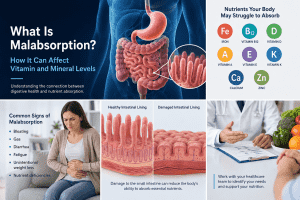
What Is Malabsorption? How It Can Affect Vitamin and Mineral Levels
What Is Malabsorption?
Eating a nutritious diet is important, but getting nutrients into your body involves more than simply eating foods that contain them.
Food first has to be digested into components your body can use. Those nutrients must then be absorbed through the digestive tract—primarily the small intestine—and enter the bloodstream.
Malabsorption occurs when the body cannot adequately digest or absorb one or more nutrients from food. It can affect macronutrients such as protein, carbohydrates and fats, micronutrients such as vitamins and minerals, or both.
Malabsorption isn’t a single disease. Instead, it can result from a variety of gastrointestinal diseases, surgical procedures and other conditions that interfere with digestion or absorption.
For some people, malabsorption is extensive and affects many nutrients. For others, it may primarily affect one or several specific vitamins or minerals.
Over time, inadequate absorption can contribute to vitamin and mineral deficiencies even when a person’s diet appears adequate.
How Does Nutrient Absorption Normally Work?
Most nutrient absorption takes place in the small intestine.
The inner surface of the small intestine contains millions of tiny projections called villi and microvilli. These structures dramatically increase the surface area available for nutrient absorption.
After food is broken down:
- Carbohydrates are primarily absorbed as simple sugars.
- Proteins are broken down into amino acids and small peptides.
- Dietary fats are digested with the help of pancreatic enzymes and bile.
- Vitamins and minerals are absorbed through different mechanisms and in different areas of the gastrointestinal tract.
Certain nutrients require particularly specific conditions for absorption.
For example, vitamin B12 absorption involves several digestive steps and ultimately occurs primarily in the terminal portion of the small intestine, called the ileum. Fat-soluble vitamins—including vitamins A, D, E and K—depend in part on normal fat digestion and absorption.
This is one reason why the cause and location of a gastrointestinal problem can influence which nutrients are most likely to become deficient.
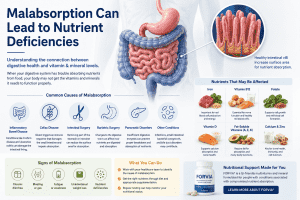
What Causes Malabsorption?
Many different conditions can interfere with digestion or absorption.
Inflammatory Bowel Disease
Crohn’s disease, particularly when it affects the small intestine, may interfere with nutrient absorption. Inflammation can reduce the intestine’s ability to absorb nutrients, while symptoms such as poor appetite or diarrhea may further reduce nutritional status.
Surgery to remove portions of the intestine can also affect absorption depending on which sections are removed. The National Institute of Diabetes and Digestive and Kidney Diseases notes that inflammation, medications, surgery and reduced food intake can all contribute to nutritional problems in people with Crohn’s disease.
[Internal link: Crohn’s Disease / IBD Nutrition page]
Celiac Disease
Celiac disease is an immune-mediated condition in which gluten triggers damage to the lining of the small intestine.
Because the small intestine plays such an important role in nutrient absorption, untreated celiac disease can lead to malabsorption and malnutrition. Physicians may test people diagnosed with celiac disease for deficiencies in certain vitamins and minerals.
Intestinal Surgery
Removing a portion of the small intestine reduces the amount of absorptive surface available.
The nutritional consequences depend on factors including:
- How much intestine was removed
- Which section was removed
- The health of the remaining intestine
- Whether the colon remains intact
Extensive intestinal resection may result in short bowel syndrome, a condition that can significantly affect fluid and nutrient absorption.
Bariatric Surgery
Some weight-loss procedures alter the anatomy of the stomach or small intestine. Depending on the procedure, this can reduce food intake, change digestion and affect nutrient absorption.
Long-term nutritional monitoring is therefore an important component of care after many bariatric procedures.
[Internal link: Bariatric Nutrition page]
Pancreatic Disorders
The pancreas produces enzymes needed to digest fats, proteins and carbohydrates.
If insufficient digestive enzymes reach the small intestine, food may not be adequately broken down for absorption. Pancreatic insufficiency can therefore result in malabsorption, particularly of fat.
Other Causes
Malabsorption can also occur with certain infections, disorders affecting bile production or delivery, small intestinal bacterial overgrowth and other gastrointestinal conditions.
Because there are many possible causes, persistent symptoms of malabsorption should be medically evaluated rather than assumed to be the result of a particular condition.
Which Vitamins and Minerals Can Be Affected by Malabsorption?
Malabsorption does not affect everyone in exactly the same way.
The nutrients affected depend on the underlying condition, the portion of the gastrointestinal tract involved, dietary intake, medications, previous surgery and other individual factors.
Some nutrients that may warrant attention include:
Iron
Iron deficiency can contribute to iron-deficiency anemia, which may cause fatigue, weakness and reduced exercise tolerance.
In some people with relatively mild malabsorption, iron deficiency may even be one of the first recognizable signs.
Vitamin B12
Vitamin B12 is important for red blood cell formation and normal neurological function.
Because B12 is absorbed in the terminal ileum, conditions or surgeries affecting this part of the intestine can increase the risk of inadequate absorption.
Low B12 can eventually contribute to anemia, fatigue, numbness, tingling and neurological problems.
[Internal link: Vitamin B12 and Crohn’s Disease]
Folate
Folate is another B vitamin necessary for DNA synthesis and normal red blood cell production.
Because folate is primarily absorbed in the proximal small intestine, diseases affecting the intestinal lining can interfere with absorption.
Vitamin D
Vitamin D plays an important role in calcium metabolism, bone health and several other physiological processes.
Conditions associated with fat malabsorption may interfere with the absorption of fat-soluble vitamins such as vitamin D.
Vitamin D status can be particularly relevant when gastrointestinal disease is accompanied by other risk factors for low bone density.
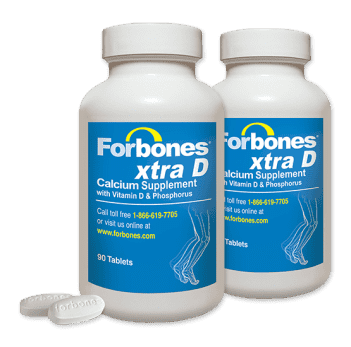
[Internal link: FORBONES / Bone Health]
Vitamins A, E and K
Along with vitamin D, vitamins A, E and K are fat-soluble vitamins.
When fat digestion or absorption is substantially impaired, absorption of these vitamins may also be affected.
Deficiencies can produce very different effects depending on the nutrient. For example, vitamin K deficiency may increase bleeding tendency, while severe vitamin A deficiency can affect vision.
Calcium
Calcium is essential for normal bone structure as well as muscle, nerve and cellular function.
Poor dietary intake, vitamin D deficiency and certain malabsorptive conditions may all influence calcium balance and long-term bone health.
Zinc and Other Trace Minerals
Depending on the underlying gastrointestinal condition, intake and losses, trace minerals such as zinc may also require monitoring.
The key point is that there is no single universal pattern of nutrient deficiency in malabsorption.
Testing and supplementation should be individualized.
What Are the Signs of Malabsorption?
Symptoms vary considerably depending on the cause and severity.
Common gastrointestinal signs may include:
- Chronic diarrhea
- Abdominal bloating
- Excessive gas
- Unintentional weight loss
- Difficulty maintaining weight
- Bulky or unusually foul-smelling stools
- Greasy or fatty stools, known as steatorrhea
However, malabsorption is not always obvious.
Sometimes symptoms of a specific nutrient deficiency become apparent before significant gastrointestinal symptoms do.
Possible signs of nutritional deficiency may include:
- Persistent fatigue or weakness
- Anemia
- Easy bruising
- Numbness or tingling
- Muscle cramps
- Bone pain or reduced bone density
- Unexplained weight loss
These symptoms are not specific to malabsorption and can have many other causes. A healthcare professional can determine whether further evaluation is appropriate.
How Is Malabsorption Diagnosed?
There isn’t one test that diagnoses every type of malabsorption.
Evaluation typically begins with a person’s medical history, symptoms, diet, medications and previous gastrointestinal conditions or surgeries.
Depending on the situation, healthcare providers may use:
- Blood tests
- Complete blood count
- Iron and ferritin testing
- Vitamin B12 and folate levels
- Vitamin D and other nutrient testing
- Stool testing
- Tests for fat malabsorption
- Breath testing
- Endoscopy
- Small-intestinal biopsy
- Imaging or disease-specific testing
The goal is not only to determine whether malabsorption is occurring, but also to identify why it is occurring.
That distinction matters because treating the underlying cause is an important part of managing malabsorption.
Can a Healthy Diet Prevent Vitamin Deficiency From Malabsorption?
A nutrient-rich, balanced diet remains important.
However, when the digestive tract cannot adequately absorb a nutrient, simply consuming more of that nutrient through food may not always be enough to correct a deficiency.
For example, someone whose Crohn’s disease affects an important area of nutrient absorption may have different nutritional needs from someone without intestinal disease—even if the two people eat similar diets.
The same is true after certain gastrointestinal surgeries.
This does not mean that everyone with a digestive condition needs high-dose supplements.
Instead, people at risk for malabsorption should work with their healthcare team to determine:
- Which nutrients they may be at risk of lacking
- Whether blood testing or other monitoring is appropriate
- Whether dietary changes are needed
- Whether supplementation is appropriate
- What dose and formulation makes sense for their individual situation
Choosing a Multivitamin When Nutrient Absorption Is a Concern
General-purpose multivitamins are typically developed for the nutritional needs of the general population.
People with gastrointestinal conditions associated with compromised nutrient absorption may have different considerations.
When discussing a multivitamin with your healthcare provider, questions to consider include:
- Does the formula provide the nutrients most relevant to my condition?
- Are the amounts appropriate for my individual needs?
- Will the product be well tolerated by my digestive system?
- Are there ingredients that may aggravate my gastrointestinal symptoms?
- Do I need additional supplementation based on laboratory results?
- Could any ingredients interact with my medications?
FORVIA: Nutritional Support Designed With Malabsorption in Mind
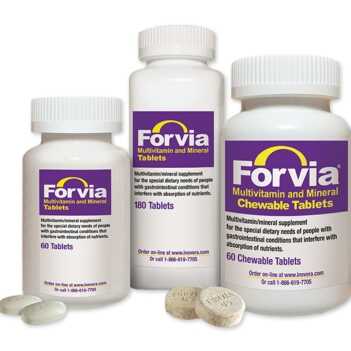
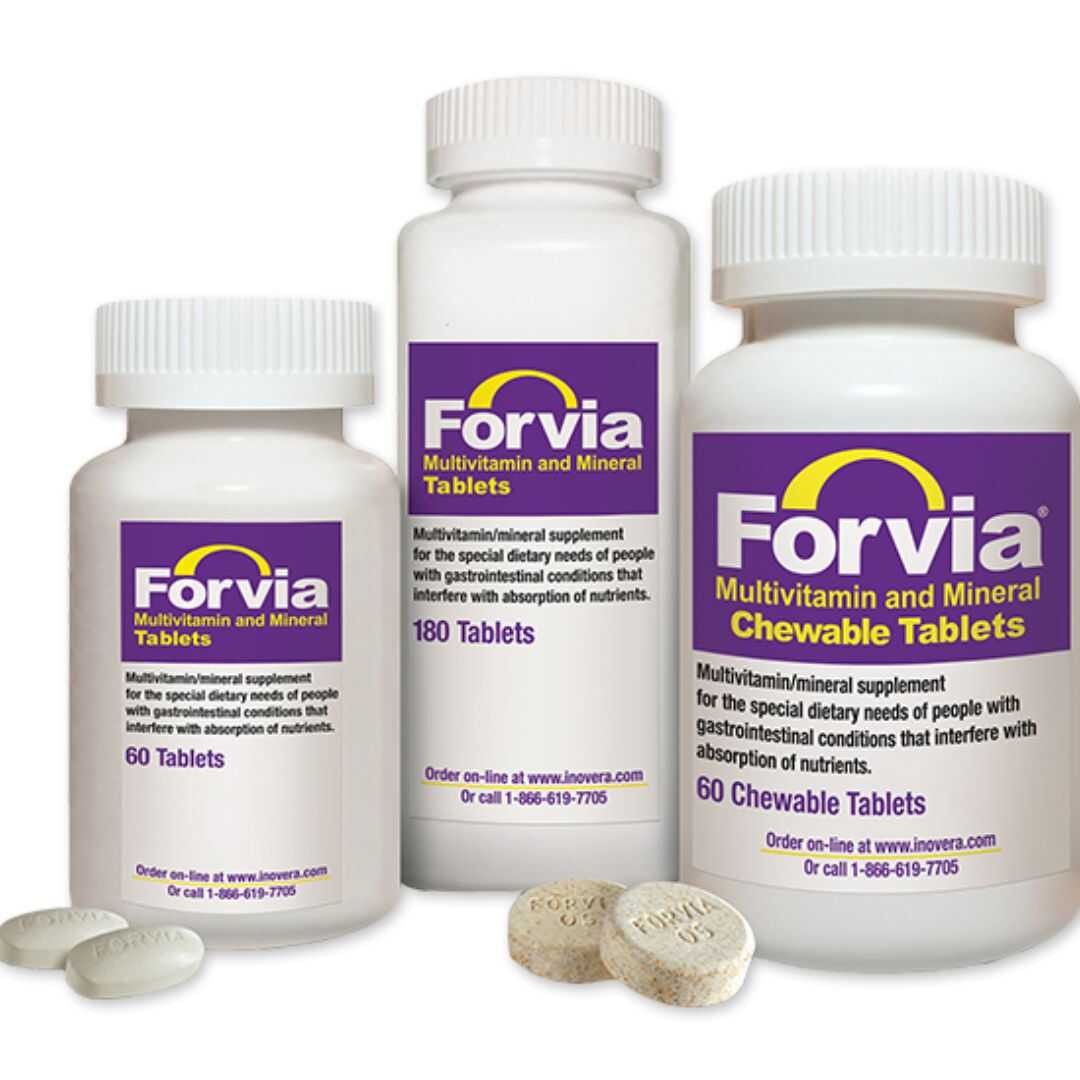
FORVIA® is a multivitamin and mineral supplement developed specifically with the nutritional needs of people with compromised nutrient absorption in mind.
FORVIA Tablets and Chewables provide vitamins and minerals selected based on nutritional deficiencies that may occur in conditions associated with malabsorption, including inflammatory bowel disease and certain gastrointestinal surgeries. The formulations are also gluten-free and lactose-free.
[CTA: Learn More About FORVIA]
A multivitamin does not treat the underlying cause of malabsorption, and individual nutritional requirements vary. Talk with your healthcare professional about whether FORVIA or another nutritional supplement is appropriate for you.
Frequently Asked Questions About Malabsorption
Can malabsorption cause vitamin deficiency?
Yes. If the digestive system does not adequately absorb vitamins and minerals from food, deficiencies can develop over time. The particular nutrients affected depend on the cause and location of the malabsorption.
Which vitamins are most affected by malabsorption?
There is no single answer for everyone. Depending on the underlying condition, deficiencies can involve iron, vitamin B12, folate, calcium, vitamin D and the other fat-soluble vitamins A, E and K, among other nutrients.
Can you have malabsorption without severe diarrhea?
Yes. Although chronic diarrhea is a common symptom, malabsorption can sometimes be less obvious. In mild cases, a nutrient deficiency such as iron deficiency may be one of the findings that leads to further evaluation.
Does Crohn’s disease cause malabsorption?
It can. Crohn’s disease involving the small intestine may interfere with nutrient absorption. Reduced food intake, diarrhea, medications and intestinal surgery can also affect nutritional status.
Can celiac disease cause malabsorption?
Yes. Untreated celiac disease damages the small intestine and can interfere with the body’s ability to absorb nutrients. Following a medically appropriate gluten-free diet allows the intestine to heal in most people, but nutrient deficiencies may need to be evaluated and treated.
Should someone with malabsorption take a multivitamin?
Not necessarily everyone. The appropriate nutritional strategy depends on the cause of malabsorption, dietary intake, laboratory results, medications and individual health needs. A physician or registered dietitian can help determine whether supplementation is appropriate.
The Bottom Line
Malabsorption means the digestive system is not adequately absorbing one or more nutrients from food. It can occur with conditions such as Crohn’s disease and celiac disease, after certain gastrointestinal surgeries, or as a result of other digestive disorders.
Because different conditions affect different nutrients, vitamin and mineral deficiencies associated with malabsorption should be evaluated individually rather than treated with a one-size-fits-all approach.
Maintaining a nutritious diet, treating the underlying gastrointestinal condition and monitoring nutrients when appropriate are all important parts of maintaining nutritional health.
For people who need additional nutritional support, a healthcare professional can help determine whether a specialized multivitamin/mineral supplement such as FORVIA is appropriate.
Medical References
- Merck Manual. Overview of Malabsorption. Reviewed March 2025.
- National Institute of Diabetes and Digestive and Kidney Diseases. Eating, Diet, & Nutrition for Crohn’s Disease.
- National Institute of Diabetes and Digestive and Kidney Diseases. Treatment for Celiac Disease.
- National Institute of Diabetes and Digestive and Kidney Diseases. Definition & Facts for Celiac Disease.
This article is for educational purposes only and is not intended to provide medical advice, diagnosis or treatment. Nutritional needs vary based on individual health conditions, medications, diet and other factors. Talk with your healthcare professional before starting or changing a dietary supplement.